

Carbon accounting tools are evolving rapidly. Today, they make it possible to save time, improve data reliability, and better structure decarbonization initiatives. At CCG, we have chosen to integrate Tapio into our practice in order to strengthen our support and focus more on action.
In a context where expectations around climate transparency are accelerating, greenhouse gas (GHG) quantification tools are multiplying. This evolution reflects a profound transformation of both the market and industry practices.
A transformation in the carbon accounting market
More and more organizations want to measure their carbon footprint. They do so to meet regulatory requirements, respond to client demands, or better understand their impact.
At the same time, the range of quantification tools has expanded considerably. Some are freely accessible, such as the one offered by BDC. Others provide advanced features tailored to more complex needs.
This underlying trend is expected to continue. GHG inventories will gradually become standardized. Companies will increasingly rely on digital solutions to facilitate data collection, ensure information traceability, improve calculation reliability, and simplify the communication of results.
At CCG, we welcome this evolution positively. It is transforming our role. Whereas we were historically heavily involved in conducting inventories, we now increasingly support our clients in the use of cloud-based solutions.
This shift allows us to dedicate more time to decarbonization strategy and turning plans into action.
A rapidly maturing market
When CCG was founded in 2016, the available options were limited. ADEME’s Bilan Carbone existed, but in Excel format and was not particularly suited to the Quebec context.
At the time, we developed a partnership with Vital Metrics, an innovative solution for that period, which has since been acquired by Watershed. Even so, the market remained relatively unstructured.
Since then, the situation has evolved rapidly. Many platforms have emerged with relevant offerings for mid-sized companies and municipalities.
Why Tapio?
In this context, the CCG team trained on Tapio, a solution developed in Belgium and particularly well suited to the current needs of organizations.
Founded in 2020, Tapio offers a carbon management platform combined with technical expertise. It enables organizations to quantify their carbon footprint, set reduction targets, develop structured action plans, track progress, and communicate results to stakeholders.
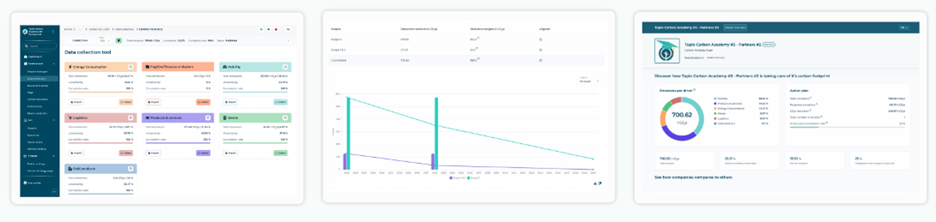
One of the platform’s main strengths lies in its ability to reduce the time devoted to data collection through optimized and collaborative processes.
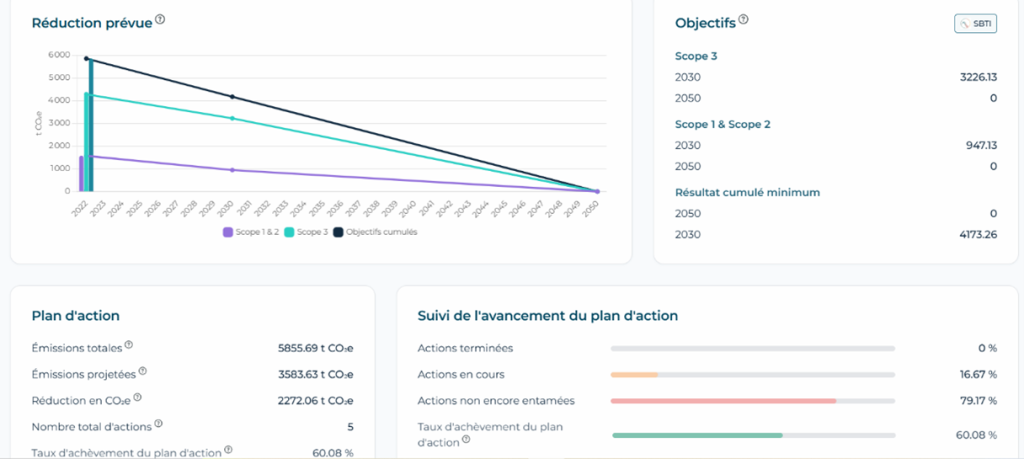
The platform also makes it possible to model different reduction scenarios and visualize the impacts of proposed actions. This facilitates decision-making and team engagement.
Added value for our clients
CCG consultants are now trained on Tapio and can support clients in using the platform.
At CCG, we prioritize a pragmatic approach tailored to each organization’s reality. While Tapio is now one of the solutions we master and recommend, it remains part of a broader ecosystem of tools that we mobilize according to our clients’ needs.
We continue to work with different platforms depending on the context, maturity level, and objectives pursued. The goal remains the same: using the right tool to support an effective and credible approach.
As the market evolves, we continue monitoring developments and building expertise on other relevant solutions. We will share these advancements over time.
But beyond the tool itself, our added value remains unchanged. We help our clients interpret results, prioritize actions, and build realistic yet ambitious pathways.
Toward a new era of decarbonization
The rise of platforms like Tapio marks an important milestone in the climate transition. These tools make it possible to move faster and improve the quality of initiatives.
At the same time, the role of experts is evolving. It is becoming less focused on calculation and increasingly oriented toward strategy, mobilization, and impact.
The question is no longer simply how to measure, but how to transform.
And if tools can accelerate progress, are we ready to scale up our climate actions?